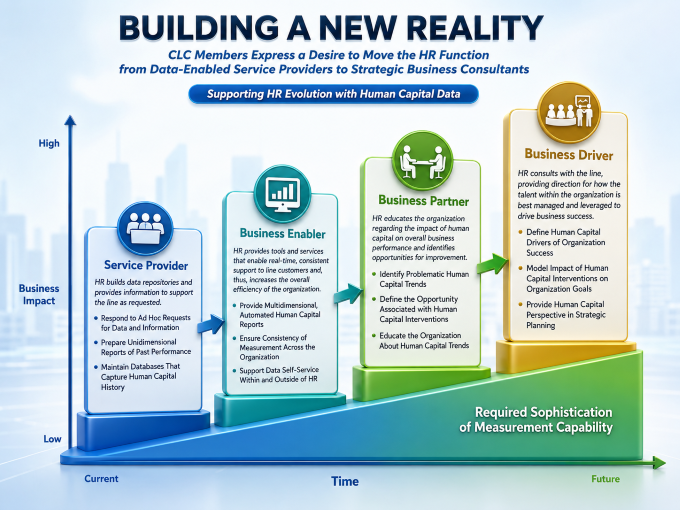






In the journey toward organizational maturity, Human Resources must move beyond being a reactive service provider to becoming a strategic driver of business success. Central to this evolution is the establishment of a robust measurement capability. As outlined in the The Metrics Standard, successful HR functions are built upon a solid, hierarchical foundation.
The Measurement Pyramid
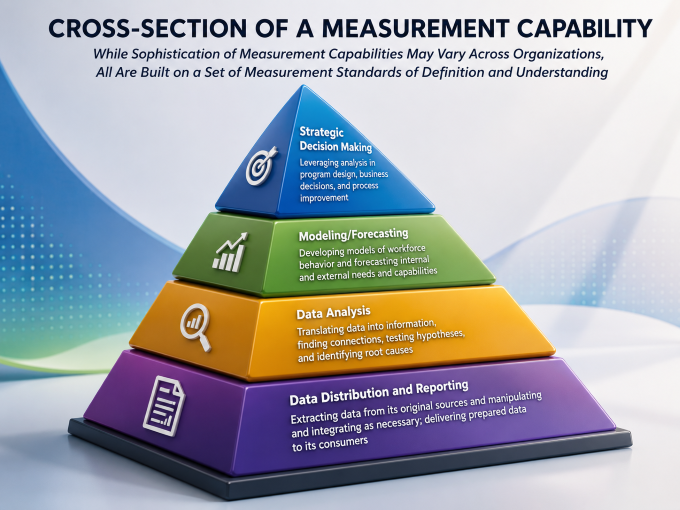
At the base of every sophisticated HR organization lies a measurement pyramid. This structure ensures that data-driven decision-making is reliable, repeatable, and aligned with organizational goals.
- Measurement Standards (The Foundation): The base level consists of universal agreement on how human capital items are defined, measured, and interpreted. Without this foundation, the entire pyramid risks instability.
- Data Distribution and Reporting: Once standards are set, the focus shifts to extracting data from source systems, manipulating and integrating it as necessary, and delivering prepared reports to consumers.
- Data Analysis: With reliable data in hand, organizations move to translate numbers into actionable information—identifying connections, testing hypotheses, and pinpointing the root causes of workforce behaviors.
- Modeling and Forecasting: At this level, HR develops models of workforce behavior, enabling the organization to forecast both internal needs and external market capabilities.
- Strategic Decision Making (The Apex): The final, highest level of the pyramid involves leveraging deep analysis to drive program design, business decisions, and continuous process improvement.
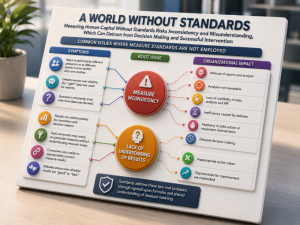
The Critical Role of Standards
The most common mistake organizations make is attempting to build higher-level reporting or forecasting capabilities without first solidifying their measurement standards. When these standards are weak, reports become contradictory, and the credibility of HR data is lost.
By prioritizing the “Foundation of Standards”—the crucial task of agreeing on formulas and interpretations—HR leadership creates a reliable platform. This allows the organization to move past the frustration of inconsistent metrics and instead focus on the real work: identifying the human capital drivers of success and providing the strategic perspective necessary for long-term growth.
Reference: The Metrics Standard: Establishing Standards for 200 Core Human Capital Measures. Page: 9