







Navigate Your Industry Path With Expert-Backed Career Roadmaps
Have you ever looked at a successful executive, a top-tier software architect, or a master supply chain strategist and wondered, “How exactly did they get there?”
From the outside, a successful career looks like a perfectly orchestrated sequence of triumphs. From the inside, however, it often feels like navigating a dense fog. With hundreds of overlapping certifications, evolving technologies, and shifting market demands, it is incredibly easy to spend months—or even years—acquiring skills that don’t actually move the needle for your career.
Ambition is a powerful engine, but without a clear map, you risk burning fuel without making forward progress. That is why modern career development requires moving away from reactive job-hunting and moving toward structured, expert-backed career roadmaps.
Here is a deep dive into how you can demystify your industry’s ecosystem, align your learning with market demands, and build a high-velocity career trajectory.
1. The Anatomy of an Expert-Backed Career Roadmap
A true career roadmap is not a generic list of job descriptions or a standard corporate ladder diagram. It is a dynamic, multi-dimensional framework that charts out the exact milestones required to transition from an entry-level contributor to an industry leader.
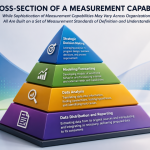
Expert-backed roadmaps break down your professional journey into four distinct layers:
- The Competency Framework: The precise matrix of hard skills, software proficiencies, and soft skills required at each seniority level.
- The Certification Track: A curated list of industry-recognized credentials that carry actual weight with global hiring managers, filtering out low-value “diploma mill” courses.
- The Experience Milestones: The specific types of projects, cross-functional collaborations, or management responsibilities you need to seek out at your current job to qualify for the next level.
- The Compensation & Demand Outlook: Data-driven projections showing regional and international salary benchmarks, along with industry growth rates, so you can evaluate the long-term ROI of your path.
2. Step 1: Pinpoint Your Starting Coordinates
Before you can map a path to your destination, you must have an honest, data-driven understanding of where you currently stand. This process is called Skills Mapping.
Too often, professionals suffer from a cognitive bias where they overemphasize their familiar routine tasks while remaining blind to their strategic gaps. To build your baseline:
- Audit Your Tools: List every enterprise system, software, or technical framework you can operate competently without supervision (e.g., SAP S/4HANA, Python, PowerBI, Lean Six Sigma tools).
- Audit Your Domain Expertise: Document the specific business processes you understand end-to-end. For instance, in logistics, do you simply know how to book a shipment, or do you understand the entire Procure-to-Pay (P2P) macro-cycle?
- Identify the Delta: Compare your current baseline against the industry standard for your target role. The gap between the two is your immediate learning roadmap.
3. Step 2: Decode Your Industry’s Progression Blueprint
Every sector has a unique DNA when it comes to upward mobility. Let’s look at how an expert-backed roadmap clarifies progression across two major modern career tracks:
Track A: Supply Chain & Business Process Management (BPM)
In traditional or operational sectors, progression relies heavily on your ability to optimize complex systems and eliminate operational friction.
- Entry-Level (e.g., Logistics Coordinator, Data Analyst): Focuses on executing daily tasks, maintaining inventory records, and handling transactional entries in an ERP.
- Mid-Level (e.g., Supply Chain Planner, BPM Analyst): Requires a shift from execution to optimization. Roadmaps at this stage emphasize mastering methodologies like Lean, Six Sigma, BPMN 2.0 process mapping, and the Kraljic Matrix for strategic sourcing.
- Leadership (e.g., Director of Operations, Chief Process Officer): Requires a macro-view of global value chains, risk mitigation, and digital transformation strategy (like migrating a legacy enterprise to modern cloud architecture).
Track B: Digital Strategy & Tech-Driven Marketing
In high-growth tech and creative fields, roadmaps shift rapidly based on technological adoption.
- Entry-Level (e.g., Content Creator, Social Media Assistant): Focuses on execution—writing copy, basic scheduling, and tracking baseline engagement metrics.
- Mid-Level (e.g., Digital Strategist, Growth Marketer): Demands mastery of performance data, audience persona development, narrative-driven campaign structures, and the deployment of AI tools for rapid content scaling.
- Leadership (e.g., Chief Marketing Officer, Head of Growth): Focuses on brand equity, multi-million dollar budget allocation, customer lifetime value (LTV) modeling, and aligning digital initiatives with core corporate revenue.
4. Step 3: Aligning Learning with Market Realities
The biggest pitfall in self-directed professional development is “random learning syndrome”—taking courses simply because they are trending, without checking if they fit into a cohesive career plan.
Expert-backed roadmaps protect your most valuable assets: your time and money. They ensure that every certificate you earn builds sequentially on the last.
- Stackable Credentials: If your ultimate goal is to lead corporate operations, your roadmap might suggest starting with an introductory course in project management, followed by a specialized SAP logistics module certification, and culminating in a comprehensive Six Sigma Green or Black Belt. Each step makes you immediately more valuable in your current role while laying the concrete foundation for the next.
- Global vs. Local Relevance: A robust roadmap takes into account where you operate. If you are based in a rapidly expanding hub like Southeast Asia but targeting international clients or multinational corporations in the US and Europe, your roadmap will explicitly prioritize globally standardized frameworks and communication fluency benchmarks over hyper-localized certifications.
5. Step 4: Activating Your Roadmap
A map is useless if it sits in a drawer. To turn a structural roadmap into tangible career advancement, you must actively integrate it into your daily professional life:
- Set Micro-Milestones: Break your 5-year career roadmap down into 90-day execution blocks. Dedicate each block to mastering one specific skill or completing one targeted certification.
- Seek Out “Stretch Assignments”: Look at the skills required for the next step on your roadmap. Ask your current manager for opportunities to shadow projects or take on minor responsibilities that use those skills. This gives you safe exposure and real-world bullet points for your resumé.
- Build a Professional Network Around Your Map: Connect with individuals who are currently working at the milestone level you wish to reach in 2 to 3 years. Observe the language they use, the challenges they discuss, and the tools they advocate for.
Your Strategic Advantage Awaits
Stop guessing what your next career move should be. By utilizing data-driven, structured career paths, you remove the emotional anxiety of professional uncertainty and replace it with execution-focused clarity.
Ready to stop wandering and start scaling your career? Explore our interactive Alison Career Guide to discover comprehensive, expert-vetted blueprints tailored specifically to your chosen industry. Find out exactly what skills, certifications, and milestones you need to secure your next promotion today.